Contact for Negotiation Skills Training for your Teams: contact@advanchainge.com | +91-9873829286

Are Your Negotiation Skills for Procurement Holding You Back from Securing Real Value?
Discover how to enhance your negotiation skills for procurement, creating value and securing agreements that withstand market volatility and foster strong supplier relationships.
WIN-WIN NEGOTIATIONROGER FISHERNEGOTIATION SKILLSBATNAVUCANEGOTIATION STRATEGIES
Ashish Mendiratta
12/12/20258 min read


Effective procurement negotiation is about far more than shaving a few percentage points off a price. It’s the discipline of shaping mutually beneficial agreements that improve service levels, reduce risk, and create lasting value with quality suppliers. As supply markets grow more volatile and sustainability targets shift, negotiation skills for procurement have become one of the most strategic capabilities one can build across a team.
Advanchainge Pvt Ltd specialises in training corporate teams to elevate their negotiation skills for procurement, sales, and internal stakeholders. If you want your category managers, sourcing leads, and contract owners to move from reactive price hagglers to strategic value creators, building these skills systematically is the surest path.
Why Procurement Negotiation Matters More Than Ever
Procurement negotiation touches everything from pricing and terms to service levels and innovation incentives. As your procurement function scales, your people engage more frequently with suppliers and cross-functional partners—and complexity rises. With more variables at play, it’s all too easy to leave cost savings, quality improvements, or risk protections on the table if one doesn’t initiate and structure vendor negotiations.
Global volatility isn’t easing. Suppliers evaluate buyer relationships continuously, pass through costs where they can, and manage their own risks. Choosing not to negotiate doesn’t avoid conflict; it simply risks missed value and exposes your organisation to preventable issues. Whether handling direct or indirect spend, robust negotiation skills for procurement directly influence outcomes across cost, speed, flexibility, and performance.
Negotiation as a Strategic Vantage, Not a Soft Skill
Many believe negotiation isn’t an innate talent reserved for a gifted few. It’s a trainable, role-specific capability. The teams that treat it as a business-critical competency gain a genuine edge—especially in today’s complex supply environments where small contractual details can create outsized operational impact.
Many professionals hesitate to negotiate to avoid confrontation. Yet negotiation doesn’t need to be combative. When approached as a collaborative process that balances firm boundaries with creative problem-solving, one uncovers options that protect priorities while enabling suppliers to succeed. Training your team on negotiation skills for procurement builds confidence and equips them to navigate complexity with clarity and control. Advanchainge Pvt Ltd provides the practical frameworks and coaching required to turn that mindset into repeatable behaviours at scale.
What Makes a Procurement Negotiation Successful?
Successful procurement negotiation starts with understanding what the business actually needs—beyond price. Flexibility, speed, and risk reduction often matter as much as headline rates. The most effective negotiators balance seemingly opposing traits: they’re straightforward but tactful, persistent but patient, focused but flexible.
Timing matters, too. Negotiation typically happens after vendor selection. It should occur before contract signing, and it ideally precedes drafting to avoid rework and redlining. In existing relationships, renegotiations at renewal are a critical opportunity to reset terms and performance expectations.
Approach shapes outcomes. Distributive negotiation is competitive, seeking to maximise one party’s gain; integrative negotiation is cooperative, seeking to create value and align interests. Both have a place, but in most supplier partnerships, the integrative approach drives better long-term results. Training your team on negotiation skills for procurement helps avoid common pitfalls—from failing to initiate negotiation to overlooking supplier perspectives—that quietly erode value.
7 Proven Procurement Negotiation Strategies
Use these seven strategies to strengthen negotiation skills for procurement across your organisation. They provide a practical, repeatable playbook for securing better deals, improving supplier performance, and building resilient relationships.
1. Preparation
Clarify your objectives and must-haves before you begin.
Understand market conditions and the supplier’s position.
Align internal stakeholders so you present a coherent view of value and risk.
2. Building Relationships
Prioritise long-term partnerships over transactional wins.
Strong relationships enable better terms, collaboration, and innovation over time.
3. Effective Communication
Keep dialogue open to surface needs and constraints on both sides.
Clear communication accelerates agreement and reduces misinterpretation.
4. Flexibility
Adapt your approach as dynamics evolve.
Be open to alternative structures that still meet your goals.
5. Value Creation
Look beyond price to service levels, delivery times, and innovation incentives.
Seek solutions that improve total outcomes for both parties.
6. Leverage Data
Bring data to the table: historical pricing, market trends, supplier performance metrics.
Evidence strengthens your position and helps anchor discussions in facts.
7. Post-Negotiation Review
Assess outcomes and process after every negotiation.
Capture lessons learned and embed improvements for next time.
Define Your BATNA (Best Alternative to Negotiated Agreement)
Your BATNA is the benchmark against which you evaluate any proposal. If an offer doesn’t meet or beat your best alternative, you should be prepared to walk away. Knowing your BATNA helps align stakeholders and sets clear boundaries for what you will and won’t accept.
To define your BATNA, follow these steps:
Identify your needs and goals for the negotiation.
Research and list all feasible alternatives if this negotiation fails.
Evaluate the strengths and weaknesses of each alternative.
Select the most advantageous and realistic option as your BATNA.
Communicate your BATNA to relevant stakeholders so the team is aligned.
Avoid common mistakes: don’t underestimate your alternatives, skip preparation, or keep your BATNA vague internally. Also, don’t become attached to a single outcome—rigidity limits your options. In procurement, having alternative suppliers ready is a classic BATNA. If a preferred supplier can’t meet acceptable terms, use your BATNA to improve the deal or exit confidently.
Map Your ZOPA (Zone of Possible Agreement)
ZOPA is the overlap between what you can accept and what the supplier is likely to offer. Map it before you enter the room to prevent stalls and dead ends.
Practical steps to map your ZOPA:
Define minimum acceptable terms across price, service levels, and other critical factors.
Research likely supplier positions using market data, past deals, and competitor pricing.
Create a simple visual to compare your terms and likely supplier offers.
Use open communication to validate assumptions and uncover hidden flexibilities.
Be ready to adjust within the ZOPA to reach a mutually beneficial agreement.
Avoid pitfalls such as weak research, unclear minimums, or neglecting relationships. A well-defined ZOPA anchors the conversation in reality and keeps discussions moving toward agreement.
Focus on Long-Term Value, Not Short-Term Wins
Short-term wins feel satisfying; long-term value sustains performance. Integrative negotiation aims to foster win-win outcomes by aligning interests and exploring creative options. While pricing, service levels, and contract terms are common focal points, the objective is to create value over time, not just on day one.
When one prioritises long-term relationships with quality suppliers, one is more likely to access innovation, improve service reliability, and generate overall savings. In volatile supply environments, negotiation skills for procurement become essential to balancing cost, risk, and speed in ways that endure. Training your team to negotiate with a long-term lens helps you protect margins and strengthen supply resilience. Advanchainge Pvt Ltd’s programmes are designed to embed these behaviours so your teams consistently drive value rather than one-off concessions.
Procurement Negotiation Basics
At its core, procurement negotiation is about defining mutually acceptable terms between buyer and vendor. Communication goes back and forth until agreement is reached. As part of the procurement cycle, it usually occurs after vendor selection but before signing—and ideally before contract drafting to avoid unnecessary redlining. Teams may also renegotiate terms ahead of renewals to reflect changing needs or market conditions.
The work is a balancing act. One needs to be direct without being abrasive, persistent without being inflexible, and focused while staying open to new options. Avoiding negotiation may feel easier in the moment, but it increases risk and leaves value untapped. That’s why negotiation skills for procurement are essential in most roles across the function.
Common Negotiation Points
While every category has nuances, many negotiations centre on a familiar set of variables:
Cost
Contract length
Payment terms
Contract volume
Delivery timing
Vendor performance metrics
Expect iterative discussions on these points. Effective negotiators prepare thoroughly, understand supplier needs, and steer clear of extremes—being too aggressive damages relationships; being too passive concedes value. Choose the right approach for the situation: distributive tactics when interests are directly opposed, integrative tactics when there’s scope to create value together. Mastering these trade-offs is a core part of negotiation skills for procurement.
Key Negotiation Skills
Negotiation draws on a blend of capabilities that, at first glance, can seem at odds:
Communication: Clear, open dialogue to surface needs and constraints.
Organisation: Structured preparation and stakeholder alignment.
Creative problem-solving: Finding options that expand the pie.
Empathy: Understanding supplier perspectives to unlock movement.
Strategic expertise: Knowing when to push, when to trade, and when to walk.
One needs to be straightforward yet tactful, persistent yet patient, focused yet flexible. Distributive and integrative approaches both have a place, and skilled negotiators move between them intentionally. In today’s volatile environment, training your people to combine these skills is non-negotiable. Advanchainge Pvt Ltd delivers targeted training for corporate teams across procurement negotiation, sales negotiation, and internal stakeholder negotiation—equipping your people to apply best practice under pressure.
Why Choose Advanchainge Pvt Ltd
If you’re serious about building negotiation skills for procurement that translate into measurable commercial impact, partner with a provider that specialises in making these capabilities practical and repeatable. Advanchainge Pvt Ltd trains corporate teams to negotiate confidently across procurement, sales, and internal stakeholder contexts, embedding BATNA/ZOPA thinking, data-led preparation, and a long-term value mindset. With Advanchainge, your team learns to secure the right deals, strengthen supplier relationships, and protect your organisation in an ever-changing market.
FAQs
Q1. How does one negotiate in procurement?
Start with clear preparation: align objectives, define your BATNA, and research supplier positions. Map your ZOPA, use data to support your case, communicate openly, and focus on creating long-term value across price, service levels, and risk.
Q2. What are the 7 key elements of negotiation?
In this context, seven proven strategies guide effective negotiations: preparation, building relationships, effective communication, flexibility, value creation, leveraging data, and post-negotiation review. Together, they help you negotiate with clarity, confidence, and commercial impact.
Q3. When should procurement negotiations happen in the vendor lifecycle?
They typically occur after vendor selection but before signing a contract, ideally before drafting to avoid rework and redlining. You can also renegotiate prior to renewals to reflect new requirements or market changes.
Q4. What should be in a procurement negotiation plan?
Include objectives and minimum acceptable terms, your BATNA, and a mapped ZOPA based on market data and likely supplier offers. Build a communication approach that keeps dialogue open, and plan value-creating options beyond price, such as service levels, delivery timings, and performance metrics.
Q5. How does focusing on long-term value change negotiation outcomes?
It shifts the conversation from one-off price concessions to integrative solutions that strengthen relationships, improve reliability, and generate overall savings. You create agreements that work over time, not just on the day they’re signed.
Q6. How can Advanchainge Pvt Ltd help my team improve Negotiation Skills for procurement?
Advanchainge trains corporate teams in procurement negotiation, sales negotiation, and internal stakeholder negotiation, turning best practice into daily habits. Programmes emphasise BATNA/ZOPA discipline, data-led preparation, and value creation so your team consistently secures better outcomes.
Ready to elevate your procurement negotiation skills?
Explore how Advanchainge Pvt Ltd can empower your team through targeted training and practical strategies at negotiationacademy.in.
Related Blogs
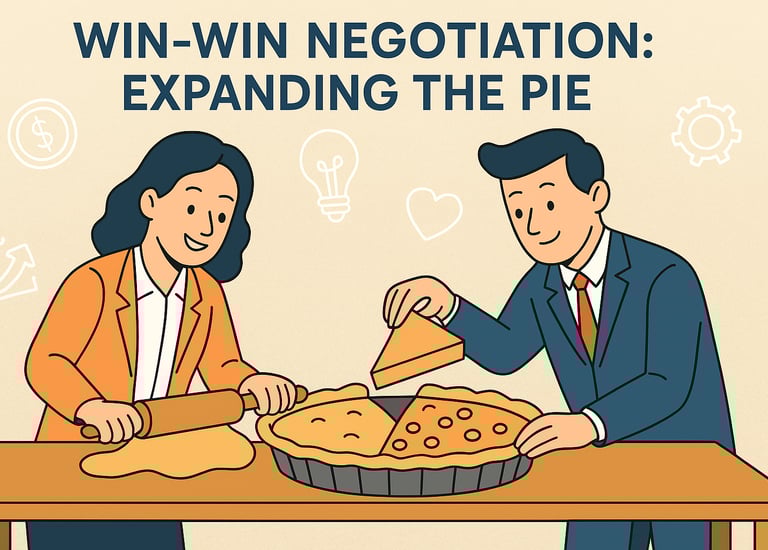
Win-Win Negotiation – Expanding the Pie
Discover how creative, win-win negotiation strategies can unlock hidden value and build better deals in business, sales, and daily life. Go beyond the obvious to find additional value for both parties. Read more..


Top 10 Negotiation Skills: Mastering Art of Negotiation
Top 10 Negotiation Skills comprehensive guide to unlock negotiation success. These skills empower you to negotiate with confidence, clarity and effectiveness. Read more...
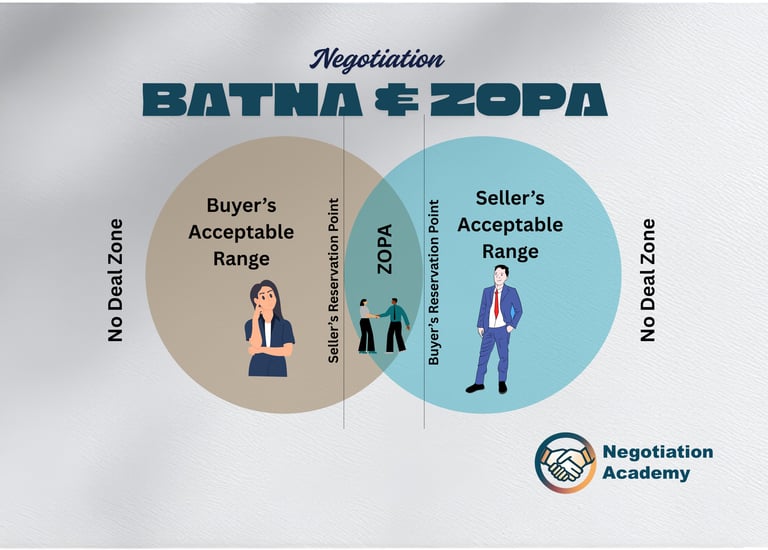
Mastering Negotiation BATNA and ZOPA - A Complete Guide
Unlock the power of Negotiation BATNA and ZOPA to gain leverage, set strong limits, and close better deals. A practical, expert-backed guide for smarter decision-making. Read more..


Reimagining Negotiation in a VUCA World
Tariffs, weaponized supply chains, and conflicts are reshaping negotiation in a VUCA world. Discover agile strategies, the VUCA Negotiation Strategies, and risk red flags to protect deals in today’s unpredictable global landscape. Read more...
Subscribe
Contact:
P2/54 DLF Phase 2 Gurugram 122002
contact@advanchainge.com
+91-9873829286
deepak.nande@advanchainge.com
+91-9820291969