Contact for Negotiation Skills Training for your Teams: contact@advanchainge.com | +91-9873829286

Discover How The Strategic Power of Silence in Negotiation Can Transform Your Deals
Explore the strategic power of silence in negotiation and how it can reshape discussions, reveal hidden needs, and enhance your decision-making skills effectively.
SILENCE AS NEGOTIATION TACTICNEGOTIATION SKILLSPERSUASIVE NEGOTIATIONWIN-WIN NEGOTIATIONNEGOTIATION TACTICSSALES NEGOTIATION SKILLSART OF NEGOTIATION
Ashish Mendiratta
12/27/202511 min read
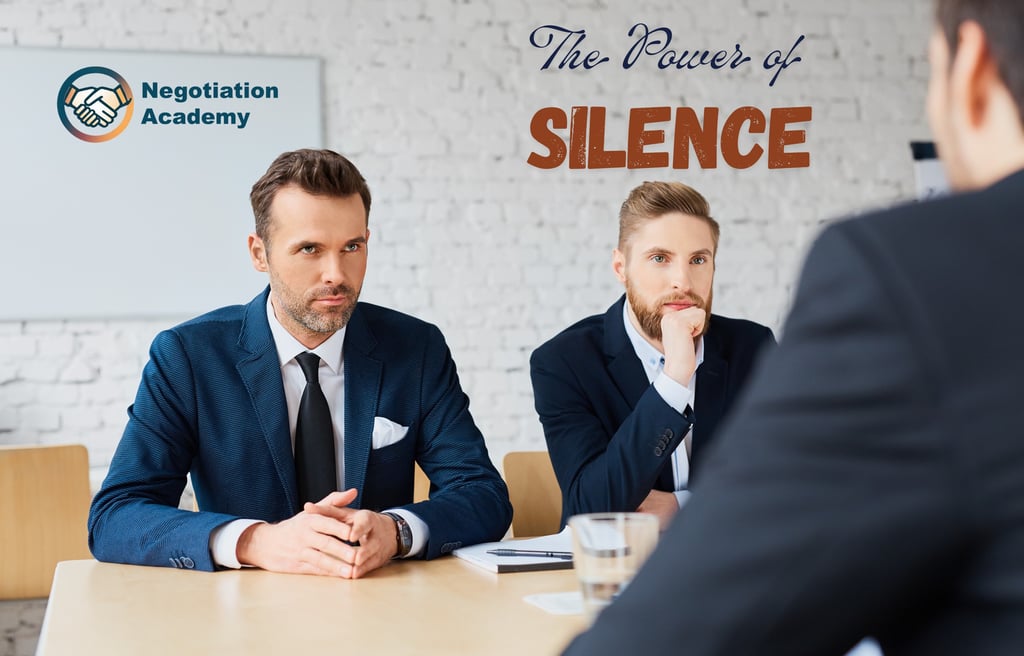
I clearly remember a negotiation experience that taught me a lesson. I was discussing the purchase of a high-voltage transformer for one of our facilities. The same supplier had delivered an identical unit barely six months earlier, yet this time the price was 8% higher.
When I asked what had changed, he said, almost automatically, “Copper and steel prices have gone up.” I already knew the data. London Metal Exchange prices were flat. I could have challenged him. I didn’t.
I stayed quiet.
For about ten seconds, I leaned back and maintained the respectful eye contact. No pushback. No correction. Just silence.
In that pause, something shifted. He began to fidget, glanced at his notes, then said, “Let me check this again. There might be some room to adjust.”
Nothing new had been said. But the silence had already said enough. Silence had done what arguments often fail to do—it created space for truth to surface, without confrontation.
The Power of Silence in Negotiations
Silence doesn’t look like a skill. It doesn’t feel like one either. In most conversations, silence is treated as a gap. Something broken. Something to fix. In negotiation, that instinct causes damage.
Most people associate Negotiation Skills with speaking—arguing, persuading, reframing, countering. Training rooms are loud. Role plays are louder. Silence gets ignored. Yet silence is one of the few moves that changes power without announcing itself.
Silence shifts weight. Not suddenly. Not cleanly. But enough.
In real negotiations—sales, procurement, internal alignment—silence often does what logic cannot. It slows momentum.
Silence is a strategic tool in negotiations that does more than fill awkward gaps—it reframes the conversation, surfaces hidden needs, and creates valuable space when discussions feel tense or tactical. When you use silence in negotiation intentionally, you challenge traditional back-and-forth patterns and encourage the other side to reveal what truly matters. It’s a deceptively simple move that strengthens self-advocacy, prevents rushed concessions, and improves the quality of your decisions.
At its best, strategic silence functions like an additional question—without you saying a word. Ask, pause, and observe. In that small window, people often expand on their thinking, clarify priorities, or soften positions. Pair silence with active listening and attention to body language, and you gain a more complete read of the room—insight you can convert into value.
People underestimate silence because it looks passive. It isn’t.
If you’re building team capability across procurement negotiations, sales negotiations, or internal stakeholder discussions, this discipline pays off quickly. Negotiation Academy trains corporate teams to harness silence in negotiation as a practical, repeatable skill—so your people influence outcomes with clarity rather than velocity.
Why Silence Feels So Unnatural
Silence makes people uneasy. That’s the point. Most adults are trained—socially, professionally—to fill space. In meetings, pauses are awkward. In presentations, silence signals loss of control. In negotiation, those habits backfire.
Silence feels like risk. Talking feels like action. So negotiators talk. They explain their position twice. They soften statements. They add context nobody asked for. They bargain against themselves without realizing it.
Silence interrupts that reflex.
In Negotiation Skills training, this is often the hardest habit to break. Participants know what to say. They don’t know when to stop. Silence requires restraint, not cleverness. That’s uncomfortable.
And useful.
The Science of Silence in Negotiation
Research shows that intentional pauses trigger a reflective mindset. In negotiations, even a brief, deliberate pause can shift both parties from reactive replies to more thoughtful, deliberate responses. Studies led by Jared Curhan highlight how 3-second pauses can drop negotiators into a more reflective state, fostering better outcomes for both sides. In other words, silence in negotiation is not empty time; it’s cognitive runway.
The science also aligns with four core advantages of using silence deliberately:
It helps you absorb what you’re hearing.
It encourages the other side to reveal more.
It signals confidence and composure.
It creates space for thoughtful decision-making.
This behavioural and psychological impact explains why silence in negotiation so often leads to breakthroughs. It slows the tempo just enough to make room for better judgement and better deals.


The Silence Study in Action
Theory becomes convincing when it translates into observable gains. In practice, short, purposeful pauses consistently elevate the quality of dialogue and the quantum of joint outcomes. One example comes from an experienced corporate attorney who coached a junior investment banker to silently “count to three” before responding. The difference in the banker’s effectiveness was, in the attorney’s words, like night and day.
These micro-pauses do three things particularly well:
They help you listen—really listen—rather than rehearse your next line.
They steady the conversation’s tempo, which helps you defuse tension and regain control when needed.
They create a thinking space in which both sides process, reassess, and refine proposals.
Silence in negotiation is more than the absence of speech; it’s a deliberate, strategic move that often unveils information you wouldn’t otherwise hear.
What This Study Means for Negotiators
The practical implication is clear: intentional silence shifts you from reacting to deciding. When you pause—especially after proposals, counters, or emotionally charged statements—you gain clarity, reduce missteps, and exert more control over direction and pace. Silence in negotiation also communicates confidence. A thoughtful pause signals that you are not easily swayed, that you are evaluating rather than yielding, and that you are comfortable holding your ground.
This change in posture influences perception. When you steer the tempo and avoid knee-jerk reactions, the other side adapts to your pace. You become the calm centre in the conversation—a position from which you can make better trade-offs and invite more considered concessions.
When to Use Silence in Negotiation
Silence can be used as a tactic in various negotiation situations. When applied naturally, it often leads to outcomes that words alone cannot achieve. Negotiation Academy integrates these techniques into practical drills and scenarios across procurement, sales, and internal stakeholder contexts, helping your teams convert reflective pauses into real commercial outcomes. Let's examine some of the common negotiation situations where silence can be a an effective tool.
Silence after Making an Offer or Counter-offer
Silence applies pressure without aggression. When you make an offer and stop talking, the other side must respond. When you reject a proposal and say nothing, the burden shifts. They must justify, adjust, or retreat.
Pressure doesn’t always come from force. Sometimes it comes from absence.
Silence removes cues. No reassurance. No hints. No emotional signals. The other party is left with their own thoughts—and their own anxiety. Humans hate unfinished loops. Silence creates one.
They try to close it. Often by conceding. Or by revealing something they didn’t plan to.
That’s leverage created without words.
Silence After a Price Discussion
Price is where silence works hardest. After stating a price, many negotiators panic. They rush to explain cost structures. They defend margins. They pre-empt objections that haven’t been raised yet.
Every extra sentence weakens the anchor. State the price. Then stop.
Let the other side react first. Let them show whether price is truly the issue or just a convenient opening. Silence separates real objections from habitual ones.
In practice, silence after price often triggers one of three responses:
A counteroffer. A justification. Or discomfort.
All three are information.
Silence after asking a Difficult or Probing Question
Questions lose power when followed by commentary.
Many negotiators ask a strong question, then immediately soften it. Or clarify it. Or explain why they’re asking. The question gets diluted.
Ask. Then stop.
Silence after a question creates obligation. The other party feels compelled to answer, not deflect. They fill the space with substance rather than deflection.
This is especially effective with open-ended questions:
“How are you thinking about this internally?”
“What constraints are driving that position?”
“What happens if this isn’t agreed today?”
Ask. Silence. Wait.
The best answers rarely come immediately. Silence gives them time to arrive.
Silence in Difficult Moments
Silence becomes more powerful when emotions rise.
In tense negotiations, people expect pushback. They expect arguments. Silence disrupts that script. It disarms without surrendering.
When someone makes an aggressive demand, silence denies them the reaction they’re seeking. It forces them to sit with their own statement and negotiate with themselves.
Often they soften it themselves. This is not avoidance. It’s containment.
Silence also prevents escalation. Responding emotionally adds fuel. Silence lets the emotion burn out on its own.
In Negotiation Skills training, this moment is where participants struggle most. Silence feels like losing control. In reality, it’s holding it.
Silence when Making Concessions
Silence protects value during concessions.
Many concessions happen because negotiators rush. They feel pressure to respond immediately. Silence creates delay. Delay creates thinking time. Thinking time reduces unnecessary giveaways.
When a concession is requested, silence signals that the request isn’t trivial. It deserves consideration. This alone increases its perceived cost. It also often triggers internal self-questioning in the mind of the person asking for the concession.
Often, after silence, the other side reframes the request themselves. They narrow it. Or attach conditions. Silence improves the trade before you speak again.
In this way, silence works alongside other negotiation techniques. It doesn’t replace them. It sharpens them.
Silence as a Counter to Manipulation
Silence neutralizes many manipulative tactics.
High-pressure deadlines. Emotional appeals. Artificial urgency. Silence slows them down. It breaks rhythm. Manipulation relies on momentum. Silence disrupts it.
When someone pushes hard, silence denies reinforcement. It removes emotional payoff. Many tactics collapse when not acknowledged.
Silence is not compliance. It’s resistance without confrontation.
Silence when Making Decision
Better decisions come from slower thinking.
Silence creates micro-pauses where judgment improves. It allows you to notice discomfort, contradictions, gaps. Talking fills space but blocks reflection.
Negotiators who value silence make fewer reactive decisions. They catch themselves before agreeing to things they’ll regret.
Silence is a quality-control mechanism.
Silence in Internal Negotiations
Silence isn’t just for external deals.
Internal negotiations—cross-functional discussions, leadership alignment, budget approvals—are often louder and messier. People interrupt. They defend turf. Silence can reset these dynamics.
When someone pushes an agenda aggressively, silence denies momentum. It forces reflection. Others in the room often step in—not to oppose, but to balance.
Silence allows group dynamics to surface without you carrying the burden alone.
In leadership settings, silence also signals confidence. Leaders who don’t rush to respond project stability. They create space for others to contribute.
Silence becomes authority without volume.
Practice Active Listening Skills
Most of us listen to prepare our reply or respond, not to understand. Silence corrects that bias. Ask open-ended questions—then pause. Give the other side room to elaborate. In one real-world coaching example, a simple “count to three in your head” rule transformed a junior banker’s ability to respond thoughtfully and build credibility.
Here’s how to embed active listening with silence in negotiation:
After an open question, hold a beat. Resist the urge to rescue the conversation.
Note the exact words used. Repetition or emphasis often signals priorities.
Let the silence prompt elaboration. People typically add detail to fill gaps.
Then summarise succinctly to confirm understanding, and only then move forward.
You will often uncover hidden opportunities—budget flexibility, delivery levers, alternative success criteria—that were not on the table a moment earlier.
Silence and Trust
Silence can build trust—if used cleanly. When someone shares sensitive information and you don’t immediately exploit it, silence shows respect. It signals that you’re processing, not pouncing. This matters in long-term relationships.
Over-talking after such moments often feels manipulative. Silence feels human.
Trust grows when people feel heard, not managed. Silence helps that.
But misuse destroys trust. Strategic silence must not feel deceptive. Intent matters.
Be Attuned to Nonverbal Signals
Silence doesn’t just sharpen what you hear—it sharpens what you see. When you pause, you create space to observe body language and expressions that reveal more than scripted statements. A steady gaze after a surprising proposal. A slight shift in posture at the mention of timelines. A micro-frown when price is discussed. These cues help you identify where flexibility might exist and where it does not.
Use silence in negotiation to:
Watch for congruence between words and demeanour.
Note changes in tone or pace when particular terms arise.
Sense discomfort or enthusiasm without forcing a response.
4 Ways to Take Advantage of Silence in Negotiation
Silence helps you absorb what you’re hearing : Most people struggle to truly listen during deals. Build a short pause into your routine to quiet your internal voice and capture what’s actually been said. A coach’s advice to “count to three” led to significant performance gains for a junior banker—proof that small pauses create big differences.
Gain insight you’d otherwise miss: Ask, then stay quiet. When you remain silent after a question or proposal, the other side often elaborates beyond their initial position. Those unguarded details—priorities, anxieties, boundaries—equip you to tailor trade-offs and shape agreements.
Exert control without being confrontational: Choose silence over immediate retaliation in heated moments. The pause itself can defuse conflict and let you recast the conversation on more constructive terms. You set the tempo; they adjust.
Create space for thoughtful decisions: Negotiations move fast. Important details get lost. Use deliberate pauses to help both parties reflect and avoid hasty commitments. The result: higher-quality decisions and outcomes you can defend later.
Practical Ways to Embed Silence into Your Next Negotiation
Start strong with a measured tempo: From the first question or anchor, build in a short pause. It sets an expectation of thoughtfulness.
Use a “three-second rule”: When you feel pressure to answer, silently count to three. This reduces reactive concessions.
Pair silence with open questions: “What would make this workable for you?” Then wait. Let the answer come fully.
Watch the room during quiet moments: Pay attention to body language and expressions that signal discomfort or interest.
De-escalate with quiet: If tension rises, pause rather than push. Silence recentres the discussion and opens space for constructive next steps.
What You’ll Notice When Silence Becomes Habit
You’ll talk less and learn more—especially about hidden constraints and priorities.
You’ll feel more in control of pace and tone.
You’ll project confidence and composure, strengthening your credibility.
You’ll make more thoughtful offers and counteroffers—often leading to better joint outcomes.
Why choose silence in negotiation as a core capability? Because it’s fast to learn, universally applicable across procurement, sales, and internal stakeholder meetings, and disproportionately effective at unlocking information, alignment, and value.
Teaching Silence in Negotiation Skills Training
Silence is difficult to teach. Frameworks are easy. Silence is experiential. People must feel the discomfort to understand its value. Reading about it isn’t enough.
In Negotiation Skills training, effective facilitators force pauses. They stop role plays mid-sentence. They let silence stretch. Participants squirm. Then learn.
Silence training is emotional training. It builds self-control more than technique.
And that’s why it lasts.
Why Partner with Negotiation Academy
If you want your teams to turn intention into habit, structured practice matters. Negotiation Academy specializes in training corporate teams on negotiation skills across Procurement Negotiation, Sales Negotiation, and Internal Stakeholders Negotiation. We help your people use silence in negotiation as a strategic lever—listening actively, reading body language, and pacing conversations to improve decisions and outcomes. Equip your teams with the pause that changes everything.
Frequently asked questions
What does silence mean in negotiation?
Silence in negotiation is a deliberate pause used to shift pressure, gather information, or prompt the other party to respond. It is a strategic communication tool, not passivity, and is often used after offers, questions, or key statements.
Why is silence important in negotiation skills?
Silence is important because it prevents over-explaining, protects leverage, and encourages the other side to reveal priorities or concessions. Strong negotiation skills involve knowing not just what to say, but when not to speak.
How long should you pause during a negotiation?
Research indicates that even a 3-second pause can drop you into a more reflective state. A practical rule is to “count to three” before responding to avoid reactive answers and improve clarity.
When should silence be used in negotiation?
Silence is most effective after stating a price or offer, asking a probing question, rejecting a proposal, or when emotions are running high. These moments naturally carry tension, making silence more impactful.
Is silence a sign of weakness in negotiation?
No. When used intentionally, silence signals confidence and control. Weakness comes from nervous or unplanned silence, not from deliberate pauses following clear communication.
How is silence related to active listening?
Silence is a core part of active listening. It allows the other person to complete their thoughts without interruption and encourages deeper disclosure, which improves understanding and decision quality in negotiations.
How can Negotiation Academy help our teams use silence more effectively?
Negotiation Academy trains corporate teams to apply silence in negotiation across procurement, sales, and internal stakeholder contexts. Through practical techniques like timed pauses and attentive observation, your people learn to listen deeper, control pace, and make better decisions.
Subscribe
Contact:
P2/54 DLF Phase 2 Gurugram 122002
contact@advanchainge.com
+91-9873829286
deepak.nande@advanchainge.com
+91-9820291969