Contact for Negotiation Skills Training for your Teams: contact@advanchainge.com | +91-9873829286

Elevate Your Sales Negotiation Skills: Four Techniques for Win-Win Outcomes You Can Implement Today
Discover how honing your sales negotiation skills can lead to better agreements. Learn techniques to prepare, manage emotions, and create win-win outcomes today!
SALES NEGOTIATION SKILLSNEGOTIATION STRATEGIESRELATIONSHIPSNEGOTIATION SKILLSPERSUASIVE NEGOTIATIONWIN-WIN NEGOTIATION
Ashish Mendiratta
12/15/20259 min read


Sales Negotiation Skills turn good proposals into great agreements. The best negotiators don’t “wing it”; they prepare, anchor discussions in their favour, frame counteroffers with strong rationales, and manage emotions to create win-win outcomes. If you’re looking to raise the bar across your team, Advanchainge Pvt. Ltd. trains corporate teams on negotiation skills across procurement negotiation, sales negotiation, and Internal Stakeholders Negotiation, equipping your people to negotiate confidently and consistently.
Sales negotiation is not about clever one-liners or outmanoeuvring the buyer. It’s a collaborative conversation designed to reach the best possible agreement, often through well-timed concessions and clear trade-offs. With the right negotiation skills, you can lead the process, protect your margins, and strengthen relationships at the same time.
What Is Sales Negotiation? A collaborative path to the best possible agreement
Sales negotiation is the collaborative conversation between seller and buyer focused on reaching the best possible agreement. It’s where both sides finalise the deal’s details—scope, terms, price—and make the concessions and compromises needed to find common ground. Effective negotiation doesn’t fight the buyer; it aligns with their priorities while protecting your value.
Practical guidance includes making the first offer to anchor discussions, framing counteroffers carefully, and using strong, constraint-based rationales. Common pitfalls include under-preparation, shallow discovery, and letting anxiety dictate your responses. The data is clear: top-performing sales negotiators are 12.5 times more likely to achieve satisfactory outcomes and target pricing. Building robust Sales Negotiation Skills helps you join that group.
Sales Negotiation Techniques: Four moves that benefit both sides
Four negotiation techniques consistently improve outcomes for buyers and sellers alike:
Make (or reframe) the first offer. An early, well-constructed offer anchors the discussion and shapes the final outcome. If the other side goes first, use framing and a strong rationale to re-anchor the conversation.
Use constraint rationales, not disparagement. When explaining why you can’t accept an offer, focus on your limits (budget, scope, timing) rather than criticising their proposal. Sellers are significantly more swayed by constraint rationales.
Highlight losses more than gains. People are more motivated to avoid losses than to achieve gains. Frame your proposal around what the buyer risks losing if they decline.
Split losses and combine gains. Break your concessions into smaller, timed moves while asking for a single, consolidated concession in return. This keeps value visible and momentum positive.
These techniques, delivered with strong preparation and emotional control, form the backbone of effective Sales Negotiation Skills.
Making the First Offer: Anchor early, frame smartly, and keep control
Making the first offer is often a smart move in sales negotiations. The first number on the table anchors the entire discussion and can have a powerful effect on the final outcome. If the other side makes the first move, you can still regain control: craft a counteroffer using framing that improves its appeal and a rationale that re-anchors the discussion to your advantage.
Common pitfalls in this phase are poor preparation, weak understanding of the buyer’s priorities, and failing to frame your offer effectively. Strong negotiation skills emphasise preparation: know your product, your customer, and your BATNA (Best Alternative to a Negotiated Agreement) cold. Set clear goals, anticipate objections, and always be willing to walk away if the terms don’t meet your minimum requirements. The discipline to walk away isn’t posturing; it’s how you protect value and maintain credibility.
Choosing the Best Rationale: Why constraint beats disparagement
When justifying your position, two rationales are common: constraint and disparagement. Constraint rationales explain what’s holding you back from accepting an offer (for example, specific budget ceilings or scope limits). Disparagement rationales critique the buyer’s offer (for example, suggesting their quality is low).
Research shows that sellers are significantly more swayed by buyers’ constraint rationales than by disparagement. Constraint rationales feel more genuine and relatable. They invite understanding rather than trigger defensiveness, which creates space for movement and agreement.
How to apply this choice in practice:
Lead with constraints. Frame your ask around financial or operational limits you’re working within.
Be honest and transparent. Clear constraints build trust and make your position easier to accommodate.
Prepare the rationale. Decide in advance how to articulate limits concisely and consistently.
Avoid relying on disparagement. It can alienate the buyer, slow progress, and make concessions feel punitive rather than collaborative. Sales Negotiation Skills that favour constraint rationales tend to accelerate agreement and preserve goodwill.
Highlighting Losses Over Gains: Tap into loss aversion to create urgency
People are more motivated to avoid losses than to chase gains. Effective negotiators use this behavioural truth by framing proposals around what the buyer stands to lose by not agreeing, rather than only emphasising what they might gain.
A simple way to bring this to life:
Identify the key benefits of your offer.
Reframe those benefits as potential losses if the deal doesn’t move forward (missed opportunity, higher future costs, lost time-to-value).
Support the message with relevant data or examples.
Prepare to counter objections by reinforcing the loss aversion angle.
Anxiety erodes performance in negotiation, and fear of loss is a common driver of anxiety. Calm, prepared negotiators address these emotions directly—both in themselves and in the buyer—by acknowledging risk and offering a path that avoids loss. Build Sales Negotiation Skills that integrate loss-framed messaging without resorting to pressure tactics: you’ll create urgency while keeping trust intact.
Splitting Up Losses and Combining Gains: Manage concessions without giving away the shop
Concessions decide how much value you keep. Negotiators gain more by dividing price concessions into smaller amounts while making a single demand for concessions in return. The net effect: the buyer feels momentum and fairness without you eroding your position.
Practical ways to apply this:
Break discounting into milestones. Instead of one large concession, offer smaller discounts tied to usage, volume, or timeline.
Frame positively. Highlight each concession’s specific benefit, so value remains visible.
Ask for one consolidated concession back. For example: a longer term, bundled scope, or a single point of contact.
Consider a software contract negotiation. Rather than an upfront large discount, the salesperson proposes smaller discounts tied to adoption milestones or performance metrics. The client experiences multiple tangible benefits over time, while the seller preserves perceived value and secures commitment. Negotiations that handle concessions in this way tend to produce higher satisfaction on both sides. In fact, top-performing negotiators are 12.5 times more likely to achieve satisfactory outcomes, underscoring how disciplined concession strategies pay off.
Avoiding Overjustification: Let strong offers stand on their merits
Overexplaining weakens good offers. When your proposal is strong, avoid padding it with flimsy justifications that invite debate and reduce perceived value. If you need to support your position, choose your rationale carefully: constraint rationales typically outperform disparagement rationales because they feel honest and non-attacking.
Common mistakes to avoid:
Over-justifying with unnecessary explanations.
Using disparagement rationales that make the buyer defensive.
Talking past your own value. If the offer is compelling, say less and let it land.
Great Sales Negotiation Skills combine confident delivery with the discipline to stop talking once the message is clear.
Strategies and Tactics for Sales Negotiation: Lead with preparation, value, and emotional control
Winning negotiations start long before the meeting. Preparation equips you to handle whatever the other side throws at you. Know your product and customer deeply, define your BATNA, and set clear goals. In the room, lead the negotiation by anchoring appropriately, framing counteroffers, and building value in terms that matter to the buyer.
Core strategies include:
Be willing to walk away. This keeps you in control and protects long-term value.
Build value relentlessly. Tailor your solution to the buyer’s needs and show the business case.
Leverage the negotiation effect. Guide the process, set the pace, and keep momentum.
Manage emotions. Create a collaborative atmosphere where both sides can move.
The most common mistakes? Failing to prepare, misreading the buyer’s needs, and rushing to close at the expense of the relationship. These are skills you can learn. Role plays, playbooks, and real-time coaching help teams practise objection handling, use silence strategically, and know when to hold firm or concede. Advanchainge Pvt. Ltd. embeds these methods into Sales Negotiation Skills training for corporate teams, so your people can turn theory into consistent, high-stakes performance.
Key Skills for Sales Negotiation: The human and the technical
Successful negotiators blend human connection with technical mastery:
Communication. Active listening and clear articulation reveal what truly matters to the other side and allow you to express your position without ambiguity.
Value-building. Winning negotiations are about proving value. By listening, tailoring solutions, and crafting win-win options, you turn interest into agreement.
Objection handling. Preparation is everything. When you know your product, customer, and BATNA, you can set confident goals and anticipate pushback.
Emotional intelligence. Negotiations can be tense. Read the room, manage your own emotions, and de-escalate theirs to keep the conversation productive.
Framing counteroffers. Use strong rationales—especially constraint rationales—to improve appeal and guide the discussion back to your anchor.
Common pitfalls. Anxiety, poor planning, and an unwillingness to walk away undermine outcomes. Intentional practice addresses each of these.
Strong Sales Negotiation Skills grow with repetition. Playbooks, role plays, and coaching help teams operationalise these capabilities and use them consistently under pressure.
6 Sales Negotiation Strategies: What top performers do differently
These six strategies show up again and again among top performers:
Always be willing to walk. If the deal doesn’t meet your minimum requirements, walking away protects long-term value and signals confidence in your BATNA.
Build value throughout. Tailor every element—scope, timing, service—to what the buyer cares about most, and keep that value visible.
Lead the negotiation. Set clear goals, anticipate objections, and guide the rhythm of the discussion. Take the initiative rather than reacting to every move.
Emotions matter. Acknowledge pressure, stay composed, and foster a collaborative tone. Calm negotiators think more clearly and make better trade-offs.
Plan to win. Prepare thoroughly by understanding your product and the buyer’s needs, defining your BATNA, and aligning your team on roles and boundaries.
Avoid common mistakes. Don’t compromise too quickly or neglect preparation. Top negotiators are 12.5 times more likely to achieve satisfaction in outcomes, and disciplined strategy is a major reason why.
To put these strategies into action:
Prepare deeply; decide in advance when you will walk away.
Make the first offer when appropriate to anchor the deal.
Frame counteroffers with strong, constraint-based rationales.
Split concessions into smaller moves and ask for a single concession in return.
Highlight losses to create urgency without sacrificing rapport.
Build, embed, and scale Sales Negotiation Skills with the right partner
The gap between knowing and doing is where deals are won or lost. Advanchainge Pvt. Ltd. helps teams close that gap by training corporate groups on negotiation skills across procurement negotiation, sales negotiation, and Internal Stakeholders Negotiation. Programmes combine proven techniques—anchoring, framing, concession strategies—with real-world practice through role plays, playbooks, and real-time coaching, so your team can execute under pressure and protect value across the pipeline.
Choose Advanchainge Pvt. Ltd. when you want Sales Negotiation Skills that stick. Your team will learn how to anchor early, frame effectively, use constraint rationales, highlight losses appropriately, manage concessions with precision, and lead negotiations with confidence—deal after deal.
FAQs
Q1. What are sales negotiation skills?
Sales negotiation skills are the capabilities that enable you to reach the best possible agreement with a buyer, including communication, value-building, objection handling, and emotional intelligence. They also include technical tactics such as anchoring the first offer, framing counteroffers with strong rationales, and managing concessions.
Q2. What skills do you need to be a sales negotiator?
You need strong communication, the ability to build and articulate value, well-practised objection handling, and emotional control. Effective negotiators also prepare thoroughly, know their BATNA, and use framing and constraint rationales to guide discussions.
Q3. How do you negotiate in sales?
Prepare deeply, then lead with a strong first offer to anchor the negotiation. Frame counteroffers with constraint rationales, highlight potential losses to create urgency, and split concessions into smaller moves while asking for a single concession in return.
Q4. Should you make the first offer in a sales negotiation?
Often yes. The first offer anchors the conversation and exerts a powerful effect on the final outcome. If the other side goes first, re-anchor by framing a counteroffer with a strong, well-prepared rationale.
Q5. Which rationale works best in negotiations?
Constraint rationales generally outperform disparagement rationales. Explaining your limits (such as budget constraints) feels more genuine and fosters empathy, whereas criticising the buyer’s offer can trigger defensiveness.
Q6. How can training improve Sales Negotiation Skills?
Training provides structure and practice, turning concepts into habits. Role plays, playbooks, and real-time coaching help teams prepare, handle objections, manage emotions, and apply techniques like anchoring, framing, and concession strategy consistently under pressure.
Ready to elevate your sales negotiation skills and foster more effective conversations? Explore how Advanchainge Pvt. Ltd. can equip your corporate team with tailored training programs to master procurement negotiations, sales strategies, and internal stakeholder engagement.
Related Blogs
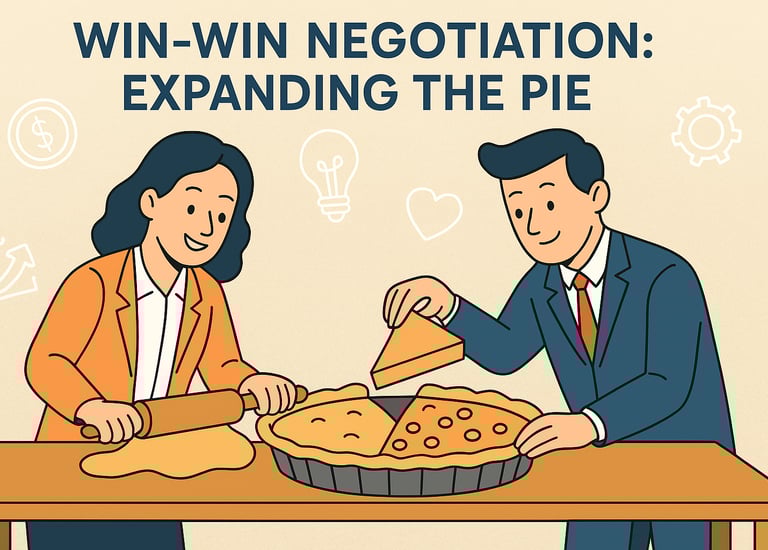
Win-Win Negotiation – Expanding the Pie
Discover how creative, win-win negotiation strategies can unlock hidden value and build better deals in business, sales, and daily life. Go beyond the obvious to find additional value for both parties. Read more..


Top 10 Negotiation Skills: Mastering Art of Negotiation
Top 10 Negotiation Skills comprehensive guide to unlock negotiation success. These skills empower you to negotiate with confidence, clarity and effectiveness. Read more...
Subscribe
Contact:
P2/54 DLF Phase 2 Gurugram 122002
contact@advanchainge.com
+91-9873829286
deepak.nande@advanchainge.com
+91-9820291969